The West of England is going electric, and it’s happening fast. From the tree-lined streets of Clifton to the coastal roads of Portishead, Bristol and North Somerset homeowners are making the switch to electric vehicles in growing numbers. Whether you’ve just taken delivery of your first EV or you’re planning, one question comes up every time: where do I charge it?
The answer, for most homeowners, is at home: overnight, effortlessly, and at a fraction of the cost of public charging. But getting there requires more than simply ordering a wallbox online. Professional EV charger installation is a regulated, specialist process, and choosing the right installer in Bristol and North Somerset makes all the difference between a seamless upgrade and a costly compliance headache.
This guide covers everything you need to know, from charger selection and smart features to DNO approvals, local grants, and what to expect on installation day with LPSEV Charging, your local OZEV-approved specialists.
Why Professional Installation Is Essential for Bristol Homeowners
It’s tempting to view a wallbox installation as a straightforward job. It isn’t, and the risks of getting it wrong extend well beyond a voided warranty.
Safety and Part P Compliance
EV charger installation is classified as notifiable electrical work under Part P of the Building Regulations. This means the work must either be carried out by a registered competent person or formally submitted to your local authority for inspection. LPSEV Charging is registered with both NICEIC and NAPIT, meaning every installation is automatically certified without requiring a separate building control application, saving you time, money, and paperwork.
DIY installation or using an unregistered trader carries serious risks: potential house fires from overloaded circuits, invalidated home insurance, difficulties when selling your property, and the inability to access government grant funding.
The Electrical Load Assessment: Often Overlooked, Always Essential
Before any wallbox goes on your wall, a competent installer will carry out an Electrical Load Assessment of your property. This is not a formality. A 7kW charger draws a continuous load equivalent to running seven electric showers simultaneously. On older properties across Bristol’s Victorian terraces in Brislington or Henleaze, the existing consumer unit and main fuse may not be rated to handle that additional demand safely.
A proper load assessment identifies:
- Your current main fuse rating (typically 60A, 80A, or 100A)
- Existing peak demand from other appliances
- Whether a consumer unit upgrade is needed before installation
- The optimal cable route to minimise disruption to your property
Skipping this step isn’t just poor practice. It can result in nuisance tripping, damage to your electrical system, or in worst cases, a fire risk. LPSEV Charging conducts a thorough assessment at every site survey, ensuring your home is ready before a single cable is run.
Choosing the Right Charger for Your Property
Not all wallboxes are equal, and the right choice depends on your car, your home, your lifestyle, and, increasingly, your energy setup.
7kW vs. 22kW: Understanding the Difference
The vast majority of UK homes are supplied on a single-phase electricity supply, which caps a home charger at 7kW. This is more than sufficient for most homeowners: a 7kW charger will replenish around 30 miles of range per hour, meaning most EVs are fully charged overnight.
22kW three-phase chargers are significantly faster but require a three-phase supply, something found in very few residential properties, though more common in some commercial or rural settings across North Somerset. Unless you have confirmed three-phase supply, a 7kW smart wallbox is the right solution for your home.
Tethered vs. Untethered
| Feature | Tethered | Untethered |
| Cable permanently attached | Yes | No |
| Convenience | High, cable always ready | Requires carrying your own cable |
| Aesthetics | Bulkier with trailing cable | Cleaner, more discreet look |
| Best for | Single-car households | Multiple EVs or leased vehicles |
| Cost | Often slightly less expensive | Marginally higher |
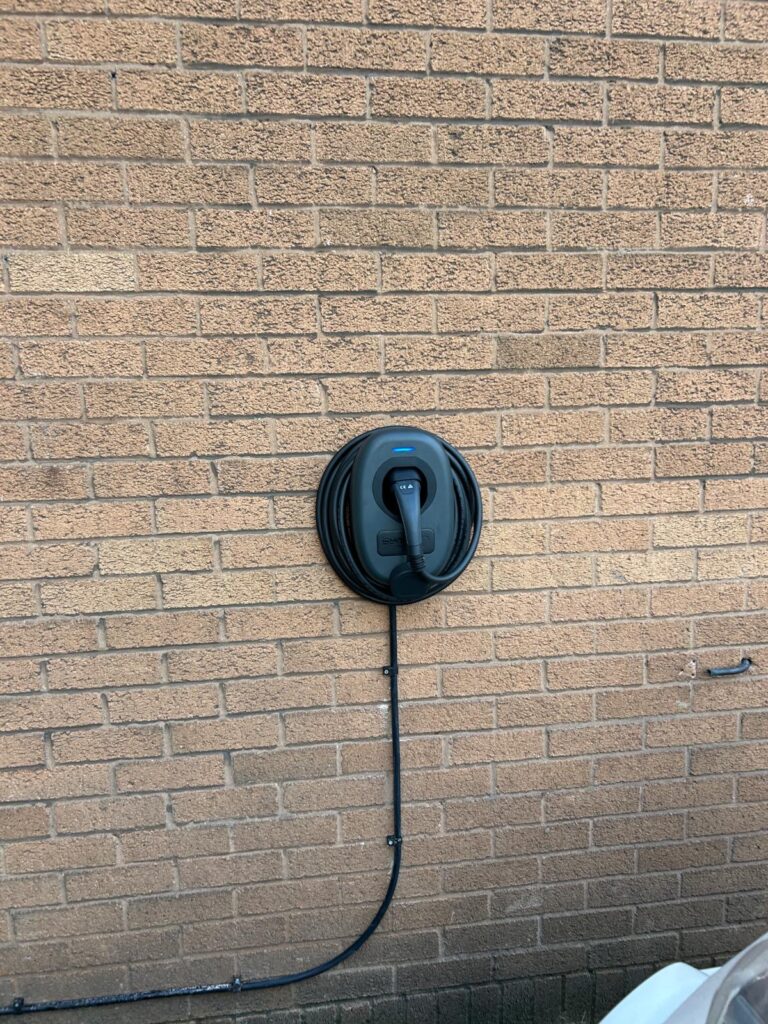
For most Bristol driveways, particularly in more design-conscious areas like Clifton, an untethered unit offers a cleaner aesthetic, while families with a single EV often prefer the grab-and-go convenience of a tethered setup.
Smart Features: Why They Matter
A basic charger simply charges your car. A smart wallbox transforms how you manage your energy costs. Key features to look for include:
- Scheduled charging: Set your car to charge during off-peak hours, particularly valuable with tariffs like Octopus Intelligent, which can drop overnight rates to as low as 7 to 10p per kWh versus 24p or more during peak times
- App control: Start, stop, and monitor charging remotely
- Load balancing: Automatically reduces charging speed during high household demand to prevent tripping your supply
- Energy monitoring: Track your charging costs and usage over time
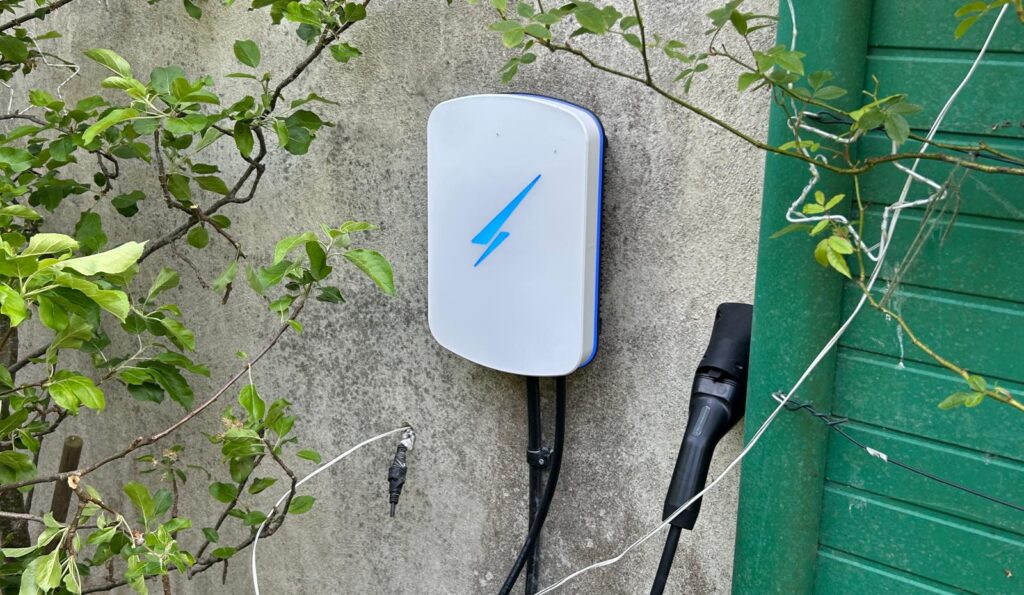
LPSEV Charging works with all leading hardware brands including Ohme, Hypervolt, Easee, and Tesla Wall Connector. Our advice is always brand-agnostic. We recommend the charger that suits your property and lifestyle, not the one with the highest margin.
Solar Integration: The Zappi Advantage
If you have an existing Solar PV system or plan to install one, the Myenergi Zappi is the standout choice. Unlike standard wallboxes, the Zappi can detect surplus solar generation and divert that free energy directly into your car, rather than exporting it to the grid at a lower rate.
Combined with a battery storage system, this creates a genuinely self-sufficient home energy ecosystem: generate during the day, store the surplus, and charge your EV overnight from your own stored power. For homeowners in Portishead, Clevedon, and the broader North Somerset area investing in whole-home energy efficiency, solar-integrated charging is increasingly the centrepiece of that strategy.
The Installation Process: What to Expect from LPSEV Charging
We’ve refined our installation process to be as straightforward and stress-free as possible. Here’s exactly what happens from your first call to your first charge.
Step 1: Site Survey (Virtual or In-Person)
Every installation begins with a survey, either a guided video call or an in-person visit, whichever suits you. We assess your consumer unit, identify the optimal cable route from your board to your parking space, check your fuse rating, and discuss charger options. This is also when we’ll identify any preliminary work needed, such as a consumer unit upgrade, and provide your full, transparent quote.
Step 2: DNO Notification
This step is handled entirely by us, and it’s one that many homeowners don’t even know exists. Your Distribution Network Operator (DNO), in this region that’s Western Power Distribution / National Grid Electricity Distribution, must be notified of any new charger installation. For chargers above 3.5kW, which includes all standard 7kW wallboxes, the DNO must be informed before or shortly after installation under the IET Wiring Regulations and G99/G100 connection standards.
LPSEV Charging manages all DNO paperwork on your behalf. You won’t need to make a single call or complete a single form.
Step 3: Physical Installation
On installation day, our engineers typically complete the full job in 2 to 4 hours for a straightforward installation. This includes:
- Mounting the wallbox at your preferred location
- Running armoured or surface-mounted cabling from your consumer unit
- Any necessary drilling through walls or floors
- Connecting and configuring the unit
We treat your home with care: dust sheets down, tidy up before we leave, and no unnecessary damage to décor or brickwork.
Step 4: Testing and Commissioning
Before we pack up, every installation is fully tested in accordance with BS 7671 IET Wiring Regulations. You’ll receive an Electrical Installation Certificate (EIC), the document your insurance company, mortgage provider, and future buyer will want to see. This certificate confirms the work was carried out safely and to the required standard.
Step 5: Handover
The final step is making sure you’re confident using your new charger. We’ll walk you through the app, set up your charging schedule, and answer any questions. If you’re setting up an Octopus Intelligent tariff or connecting to a solar diverter, we’ll help you configure that too.
Local Considerations for North Somerset and Bristol
OZEV Grants: What’s Still Available?
The EV infrastructure landscape has shifted. The previous OZEV grant for standard homeowners with off-street parking has ended, but funding remains available in specific circumstances:
- Renters and flat owners: The EV chargepoint grant provides up to £350 (or 75% of the cost, whichever is lower) for those in flats or rented accommodation, provided the landlord consents and the property has dedicated off-street parking
- Landlords: Can claim up to £350 per chargepoint, up to a maximum across multiple properties
- Workplace charging: Separate grant schemes exist for businesses
LPSEV Charging will confirm your grant eligibility during the site survey and handle the application process where applicable, meaning the discount comes off your invoice directly with no waiting for rebates.
Off-Street Parking: The Key Requirement
Regardless of grant eligibility, a dedicated off-street parking space with a direct cable route to your property is the fundamental requirement for a home charger installation. Homeowners without a driveway, which is common in parts of inner Bristol, are unfortunately not currently eligible for a home wallbox under current regulations, though pavement gully chargers and on-street charging solutions are being piloted by Bristol City Council in some areas.
Areas We Serve Across the Region
LPSEV Charging covers the full Bristol and North Somerset area, including:
Bristol: Henleaze, Clifton, Brislington, Bedminster, Westbury-on-Trym, Filton, Stoke Bishop, Bishopsworth
North Somerset: Portishead, Clevedon, Weston-super-Mare, Nailsea, Yatton, Backwell, Long Ashton, Congresbury, Winscombe
Our local base means faster response times, engineers who know the local housing stock (including Bristol’s distinctive Victorian and Edwardian terraces), and no national call-centre frustration.
Ready to Charge Smarter?
Making the switch to home EV charging is one of the most practical upgrades a Bristol or North Somerset homeowner can make, reducing running costs, adding convenience, and future-proofing your home as the grid gets greener.
LPSEV Charging is your local OZEV-approved, NICEIC and NAPIT-certified installation partner across Bristol and North Somerset. We manage everything from your initial load assessment and DNO paperwork to installation day and beyond.
Get your free, no-obligation site survey in Bristol and North Somerset today. Whether you’re in Clifton or Clevedon, Henleaze or Portishead, we’ll come to you, assess your property, and give you a clear, fixed-price quote with no pressure and no surprises.
Not quite ready to book? Download our Pre-Installation Checklist for North Somerset and Bristol Homeowners, a quick reference guide to help you prepare your property and get the most from your installation day.
Contact LPSEV Charging today and join the growing community of West of England homeowners charging smarter, cheaper, and greener.
Frequently Asked Questions
How much does professional EV charger installation cost?
For a standard 7kW smart wallbox installation in a typical Bristol or North Somerset home, expect to pay in the region of £800 to £1,200 fully installed. This range accounts for the charger hardware, labour, materials, and all certification. Factors that affect cost include the distance from your consumer unit to the parking space, whether a consumer unit upgrade is required, and your choice of charger brand. We provide itemised, fixed-price quotes after your site survey with no hidden extras.
Do I need a smart meter for a home EV charger?
No. A smart meter is not required for installation. However, if you plan to take advantage of time-of-use tariffs like Octopus Intelligent, which offers significantly cheaper overnight rates in exchange for allowing the energy supplier to schedule charging, a smart meter is a prerequisite for that tariff specifically. We’d recommend getting one installed ahead of time if you don’t already have one, as it’s free through your energy supplier.
Can I install a charger if I don’t have a driveway?
Unfortunately, a dedicated off-street parking space is a regulatory requirement for home charger installation. The charger must be physically adjacent to your property and cannot rely on a public road or shared communal area for cable routing. If you park on the street, a home wallbox isn’t currently viable, though Bristol City Council continues to expand on-street charging infrastructure across the city, and public rapid chargers are increasingly available across the M4 corridor and North Somerset.
How long does installation take?
Most installations are completed in a single visit of 2 to 4 hours. More complex installs, such as those requiring consumer unit upgrades or longer cable runs, may take a full day. We’ll give you a clear timeframe during your site survey.
Is my home’s electrics definitely compatible?
That’s exactly what our Electrical Load Assessment is designed to determine. In most cases, modern homes with a 100A supply and an updated consumer unit are perfectly compatible. Older properties may require minor upgrades, which we’ll identify and quote for transparently before any work begins.
