Making the switch to an electric vehicle is an exciting step, but getting your home ready for an EV charger installation is just as important as choosing the right car. At LPSEV Charging, we help homeowners across Portishead enjoy a smooth, safe, and fully compliant installation from start to finish. This guide walks you through everything you need to do before our team arrives at your door.
Why Preparing Your Home Matters Before Installing an EV Charger
A little preparation before your installation day can make a significant difference. When your home is ready, the installation process is faster, safer, and less likely to uncover costly surprises. Taking time to prepare means:
- The installation can be completed in a single visit
- Your electrical system meets the required safety standards
- You avoid unexpected upgrade costs on the day
- Your charger operates efficiently and reliably for years to come
Skipping this preparation stage is one of the most common reasons installations get delayed or require follow-up visits.
Step 1: Check Your Home’s Electrical Capacity
Inspect Your Consumer Unit (Fuse Board)
Your consumer unit, also known as the fuse board, is the heart of your home’s electrical system. Before an EV charger can be installed, it needs to have enough capacity to handle the additional load. During your site survey, an installer will check whether your fuse board has a spare circuit available and whether it is modern enough to support the installation.
Older fuse boards with rewireable fuses may need replacing before an EV charger can be safely fitted. Upgrading your consumer unit is an additional cost, but it also improves the overall safety of your home’s electrical system.
Dedicated Circuit Requirement
EV chargers require their own dedicated electrical circuit. This means the charger draws power directly from your consumer unit rather than sharing a circuit with other appliances. A dedicated circuit prevents overloading, reduces the risk of tripped breakers, and ensures the charger operates safely at all times. Your installer will run a new circuit specifically for the charger as part of the installation process.
Step 2: Choose the Best Location for Your EV Charger
Selecting the right location for your charger will affect how convenient and practical it is to use every day. Consider the following when planning placement:
- Proximity to your parking space: The charger should be close enough to your vehicle to allow comfortable cable reach without stretching or creating a trip hazard.
- Distance from the electricity supply: A location close to your consumer unit keeps cable runs short, which reduces cost and installation time.
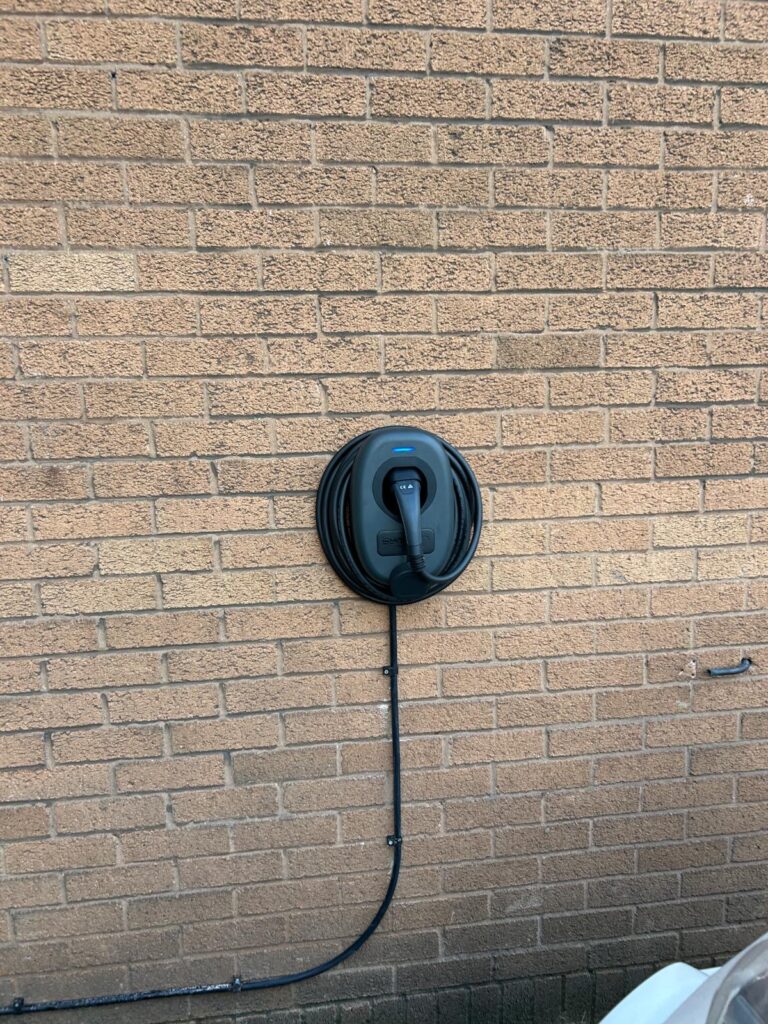
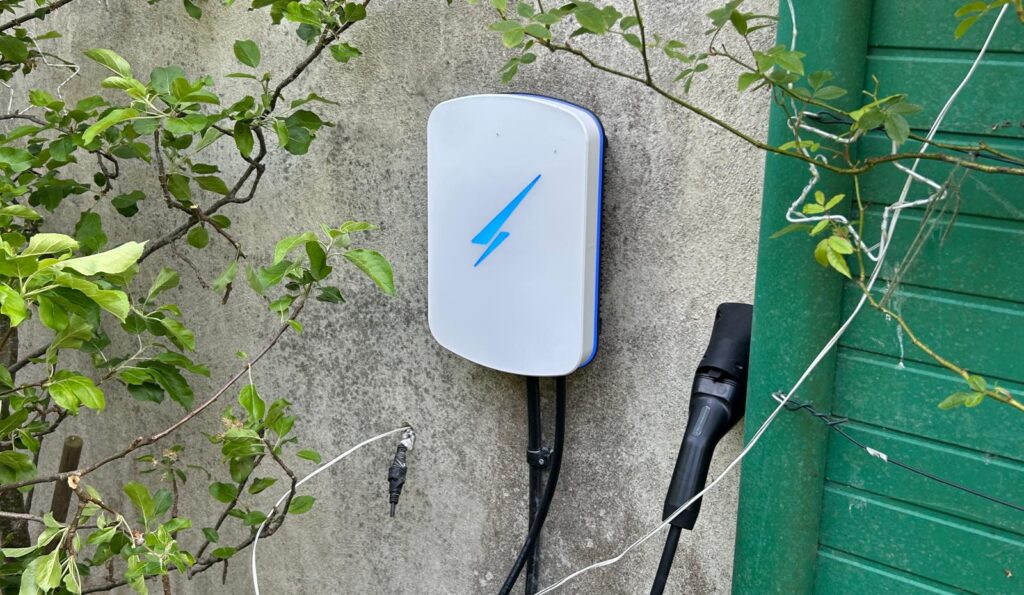
- Wall or pedestal mounting: Most home installations use a wall-mounted charger fixed to the exterior of the property or garage wall. Pedestal options are available where wall mounting is not practical.
- Weather exposure: Choose a sheltered location where possible. Modern home EV chargers are weatherproof, but minimising direct exposure to rain and sun extends the life of the unit.
A good installer will advise you on the most practical and cost-effective placement during the site survey.
Step 3: Ensure You Have Off-Street Parking
UK regulations generally require that an EV charger is installed at a property with off-street parking. This includes a private driveway, garage, or allocated parking space. The requirement exists to ensure the charger is positioned safely on private land, keeping cables away from public footpaths and roads.
If your property does not have off-street parking, installation may not be possible under standard permitted development rules. In some cases, local authorities offer on-street charging solutions. Contact your local council or speak to the team at LPSEV Charging to explore your options.
Step 4: Understand UK Planning and Regulatory Requirements
Permitted Development Rules
The good news is that most homeowners in Portishead will not need to apply for planning permission to install an EV charger. Residential EV charger installations typically fall under permitted development rights, provided they meet certain conditions:
- The charger unit must not exceed 0.2 cubic metres in volume
- It must be installed no higher than 1.6 metres from the ground
- If facing a highway, it must be positioned at least 2 metres from the road
There are exceptions to permitted development rights. If your home is a listed building, located within a conservation area, or is a flat within a larger building, you may need to seek planning approval before installation. It is always worth checking with your local planning authority if you are unsure.
Building Regulations and Electrical Compliance
All EV charger installations in the UK must comply with Part P of the Building Regulations, which covers electrical safety in domestic properties. This means the work must be carried out by a qualified electrician who is registered with a competent person scheme such as NICEIC or NAPIT.
Wiring must also conform to BS 7671, the 18th Edition IET Wiring Regulations. Additionally, since 2022, all new home EV charger installations in the UK are legally required to use a smart charge point. Smart chargers must be able to communicate with the grid, allow scheduled charging, and respond to energy demand signals.
Step 5: Check Grid Capacity with Your Distribution Network Operator
Your local Distribution Network Operator (DNO) manages the electricity grid infrastructure in your area. When you install a home EV charger, your installer is responsible for notifying the DNO about the new connection and the additional load it places on the network.
In most cases, this is a straightforward notification process and does not cause any delays. However, if your local grid is already under significant demand, the DNO may request an assessment of capacity before approving the connection. In rare cases, a fuse upgrade at your property boundary may be required. Your installer will manage this process on your behalf.
Step 6: Choose a Smart EV Charger
As mentioned above, smart EV chargers are now mandatory for all new home installations in the UK. But beyond legal compliance, smart chargers offer genuinely useful benefits for everyday use:
- Load balancing: Smart chargers monitor your home’s total energy use and adjust charging speed to prevent overloading your electrical system.
- Remote control: Manage your charger from a smartphone app, allowing you to start, stop, or schedule charging from anywhere.
- Energy scheduling: Set your charger to run during off-peak hours when electricity tariffs are lower, reducing your overall charging costs.
- Cheaper overnight charging: Many energy suppliers offer overnight tariffs specifically for EV owners. A smart charger lets you take full advantage of these rates automatically.
The team at LPSEV Charging installs OZEV-approved smart chargers that meet all current UK regulatory requirements.
Step 7: Schedule a Professional Site Survey
Before any installation takes place, a professional site survey is an essential first step. This visit allows a qualified installer to assess your property and confirm that everything is in place for a straightforward installation. During the survey, your installer will typically check:
- The condition and capacity of your consumer unit (fuse board)
- Your parking layout and the most suitable charger location
- The most practical cable route from the consumer unit to the charger position
- Whether your property has a suitable internet connection for smart charger functionality
- The earthing system to ensure it meets the requirements for safe EV charger operation
The survey also gives you the opportunity to ask questions, discuss charger options, and receive a clear quote for the full installation.
Why Choose Professional EV Charger Installers in Portishead
Choosing the right installer matters. At LPSEV Charging, we are proud to offer Portishead homeowners a fully managed, professional installation service backed by genuine local expertise. Here is what sets us apart:
- Certified installers: Our engineers are fully qualified and registered with recognised competent person schemes, meaning all work meets UK regulatory standards.
- OZEV-compliant chargers: We supply and install only government-approved smart charge points that comply with the latest UK regulations.
- Full installation and testing: From initial survey through to final safety testing, we handle every aspect of the installation process.
- Local knowledge: As a local business serving Portishead and the surrounding area, we understand the specific requirements and conditions that apply to properties in this region.
What Happens on Installation Day
Once your survey is complete and everything is confirmed, installation day is typically a smooth and efficient process. Here is what to expect:
- Electrical inspection: Our engineer begins with a thorough check of your consumer unit and existing wiring to confirm everything is safe and ready.
- Dedicated circuit installation: A new circuit is run from your consumer unit to the charger location, following the agreed cable route.
- Charger mounting: The charge point is securely mounted in the agreed position, whether on an exterior wall, garage wall, or pedestal.
- Safety testing: All wiring and connections are tested to confirm full compliance with BS 7671 and Part P regulations.
- Demonstration: Our engineer will walk you through how to use your new charger, including how to access any smart features through the accompanying app.
Most home EV charger installations are completed within 3 to 4 hours, leaving you ready to charge your vehicle on the same day.
Get Your Home EV Charger Installed in Portishead Today
Preparing your home for an EV charger installation does not have to be complicated. With the right guidance and a trusted local installer, the process is straightforward and the benefits are immediate.
At LPSEV Charging, we take care of every detail, from your initial site survey through to final testing and commissioning. Our certified team is ready to help Portishead homeowners make the most of their electric vehicles with a safe, compliant, and professionally installed home charger.
Call us today or request your free quote online and take the first step towards effortless home charging.
Frequently Asked Questions
Do you need planning permission for an EV charger in the UK?
In most cases, no. Residential EV charger installations typically fall under permitted development rights and do not require planning permission. Exceptions apply to listed buildings, properties in conservation areas, and flats. Always check with your local planning authority if you are uncertain.
How long does it take to install an EV charger at home?
A standard home EV charger installation usually takes between 3 and 4 hours. This can vary depending on the complexity of the wiring, the distance of the cable run, and whether any electrical upgrades are needed beforehand.
Do I need a dedicated circuit for an EV charger?
Yes. EV chargers must be connected to a dedicated electrical circuit for safety and performance reasons. This circuit is installed directly from your consumer unit to the charger location as part of the installation process.
Can I install an EV charger myself?
No. EV charger installation must be carried out by a qualified electrician who is registered with a competent person scheme. This is a legal requirement under Part P of the Building Regulations. Attempting a DIY installation could invalidate your home insurance and create serious safety risks.
