Choosing the right home EV charger is one of the most important decisions you will make as an electric vehicle owner. With more drivers switching to EVs across the UK, home charging has become the go-to solution for daily top-ups. But before you book an installation, there is a fundamental question to answer: should you go for a tethered or untethered EV charger?
Both options offer real advantages depending on your driveway layout, your vehicle, and how often you charge. This guide walks you through everything you need to know so you can make a confident, informed decision.
Understanding Home EV Charging Systems
What Is an EV Charger?
A home EV charger, also known as an Electric Vehicle Supply Equipment (EVSE) unit, is a wall-mounted device that delivers AC power to your electric vehicle. Unlike a standard three-pin plug, a dedicated home charger provides faster, safer, and smarter charging, typically at Level 2 speeds ranging from 7kW to 22kW.
The Role of EVSE in Home Charging
EVSE units manage the flow of electricity between your home supply and your vehicle. They include safety features like earth fault protection, overload detection, and in many modern units, smart scheduling capabilities via an app. The charger itself does not supply DC power directly. Instead, your vehicle’s onboard converter handles the conversion, while the EVSE controls the process safely.
Why Charger Type Matters for Driveway Installations
Your driveway layout, the number of vehicles in your household, and your daily charging habits all influence which charger type suits you best. A tethered unit attached to a wall near a narrow parking bay creates a different experience compared to a socketed unit with a flexible cable stored in your boot. Getting this decision right from the start saves you time, money, and frustration down the line.
What Is a Tethered EV Charger?
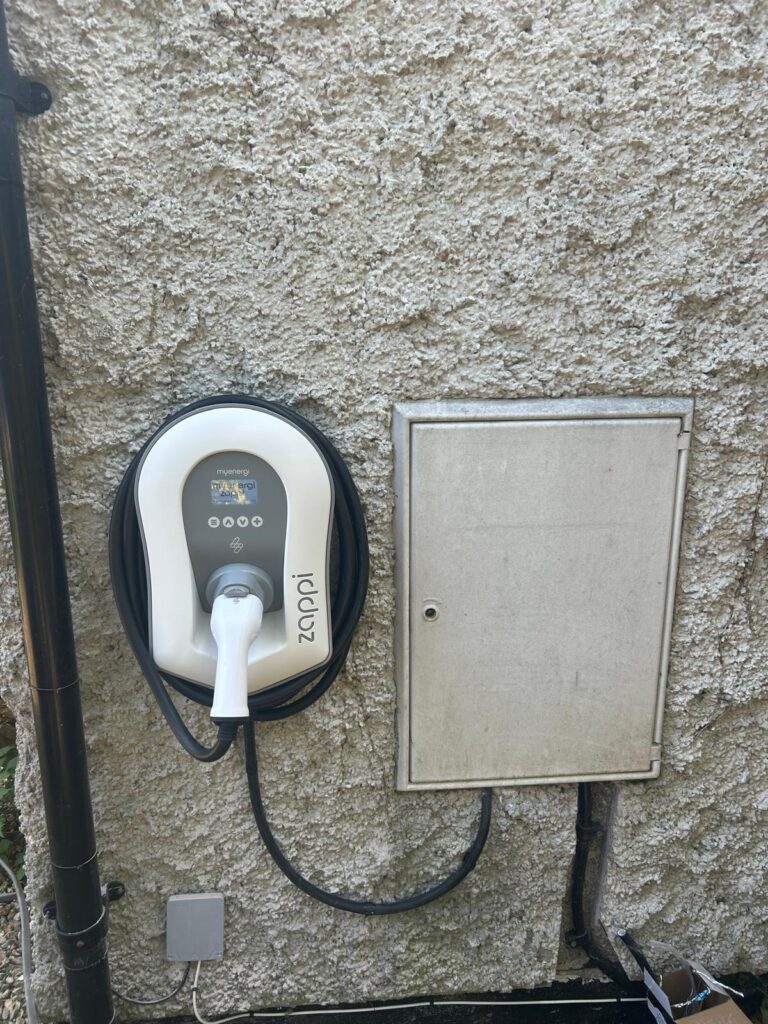
A tethered EV charger comes with a permanently attached charging cable. You simply pull the cable from the unit, plug it into your vehicle, and charging begins immediately. No searching for a cable, no untangling from a bag, no fuss.
Tethered chargers typically come with a Type 2 cable measuring between 5 and 7 metres, which is long enough to reach most parking positions from a wall-mounted unit.
Benefits of a Tethered EV Charger
Plug-and-charge convenience: The cable is always ready to use. When you arrive home, plugging in takes seconds, which is ideal for drivers who charge every evening.
Lower theft risk: Because the cable is fixed to the unit, it cannot be removed and stolen as easily as a loose cable.
Ideal for single-vehicle households: If everyone in your home drives the same EV or uses the same connector type, a tethered charger removes all unnecessary steps from the charging process.
Faster daily routine: There is no need to retrieve a cable from your car boot or remember to bring it with you. The charger is always ready.
Limitations of a Tethered EV Charger
Fixed cable type: A tethered charger is locked to a specific connector, usually Type 2 in the UK. If you upgrade to a vehicle that uses a different standard in the future, you may need a new unit.
Visible cable: When not in use, the cable hangs on the wall or sits in a holster. This is a minor aesthetic consideration but worth noting for those who prefer a cleaner installation.
Cable replacement: If the cable becomes damaged, replacing it may require a service call or a full unit swap, depending on the model.
What Is an Untethered EV Charger?
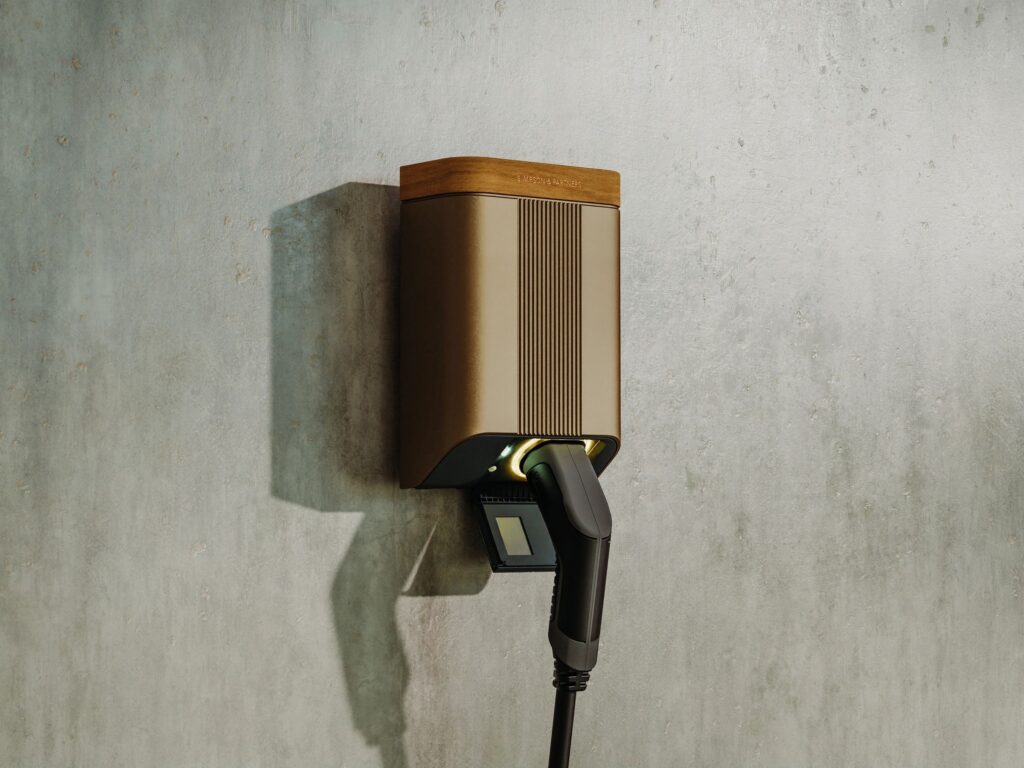
An untethered EV charger, also called a socketed EV charger, has no cable attached. Instead, it features a socket outlet, typically a Type 2 socket, into which you plug a separate detachable charging cable. You supply your own cable, either stored in your vehicle or kept near the charger.
Benefits of an Untethered EV Charger
Multi-vehicle flexibility: If your household has two different EVs with different connector requirements, a socketed charger can work with both, provided you have the appropriate cables.
Cleaner wall appearance: Without a dangling cable, the unit looks more compact and streamlined when not in use.
Easy cable upgrades: As connector standards evolve, you can simply swap your cable rather than replacing the entire unit. This makes untethered chargers a smarter long-term investment for many households.
Custom cable length: You can choose a cable that suits your exact parking position, whether that is a shorter 3-metre cable or a longer 8-metre option.
Limitations of an Untethered EV Charger
Extra step required: You need to retrieve and connect your cable each time you charge, which adds a small but real inconvenience to your daily routine.
Cable storage: The cable needs to be stored somewhere, either in the car boot, a wall-mounted holder, or a cable tidy unit near the charger.
Potential cable theft: A loose cable is easier to steal than a fixed one, so some homeowners invest in a cable lock or lockable storage box.
Tethered vs Untethered EV Chargers: Key Differences
| Feature | Tethered Charger | Untethered Charger |
|---|---|---|
| Cable configuration | Permanently attached | Detachable, user-supplied |
| Convenience | High | Moderate |
| Flexibility | Low | High |
| Installation simplicity | Simple, no cable needed | Requires separate cable purchase |
| Cable length | Fixed (typically 5 to 7 metres) | Customisable |
| Aesthetics | Cable visible on wall | Cleaner unit appearance |
| Security | Lower cable theft risk | Cable can be removed or stolen |
| Future-proofing | Limited to one connector type | Adaptable with different cables |
| Multi-vehicle support | Limited | Excellent |
| Cable maintenance | May require unit service | Cable replaced independently |
| Upfront cost | Charger price includes cable | Cable purchased separately |
Which EV Charger Is Best for Your Driveway Layout?
Front-Facing Driveways
For a standard front-facing driveway where your car parks directly ahead of the garage or boundary wall, a tethered charger is often the most practical choice. The cable reaches your vehicle easily, and the plug-and-charge simplicity fits the high-frequency charging routine most EV drivers develop.
Side Entrances or Walkways
If your driveway runs alongside the house or a boundary wall with pedestrian access nearby, cable management becomes more important. An untethered charger with a neatly stored cable reduces trip hazards and keeps the walkway clear when the car is not plugged in.
Narrow Driveways
On a narrow driveway where you park close to the charger, a socketed unit with a shorter cable can be a neater solution. A permanently attached cable on a tethered unit can be awkward in tight spaces, especially if it needs to reach around the front or rear of the vehicle.
Detached Garage Installations
For chargers installed inside or beside a detached garage, either type can work well. However, if the garage serves multiple vehicles, an untethered charger gives you the flexibility to accommodate different EVs without any changes to the installed equipment.
Convenience Factors Homeowners Should Consider
Before committing to either charger type, think through the following:
Daily charging frequency: If you plug in every night, a tethered charger rewards you with a faster, simpler routine. If you charge less frequently or share the point with different drivers, untethered offers more flexibility.
Weather conditions: In wet or cold weather, fumbling with a cable stored in your boot is less appealing. A tethered charger removes this entirely. However, a good cable tidy mounted near an untethered unit solves most of this inconvenience.
Cable handling: Some drivers find coiling and storing a cable mildly inconvenient. Others barely notice it. Think honestly about how you will handle this every day.
Parking position: Consider where on your driveway you park most often. The charger should be positioned so the cable reaches your inlet comfortably without tension or excessive slack.
Multi-vehicle households: Two EVs with different cable types in the same household make a strong case for an untethered charger. It removes the need for a second installation entirely.
Cost Comparison
Tethered chargers typically include the cable as part of the unit cost, so the upfront price reflects the full package. There are no additional purchases required before you can start charging.
Untethered chargers are sometimes slightly lower in unit price, but you will need to factor in the cost of a quality Type 2 charging cable, which can range from around £50 to £200 depending on length and brand. Over the lifetime of the unit, cable replacement costs remain low if you choose a reputable cable.
Installation costs are broadly similar for both types. The main variables are the location of your consumer unit, the length of cable run required, and any groundwork needed to route the supply to the charger position.
Long-term maintenance slightly favours untethered chargers, since a damaged cable can be swapped without touching the installed unit. On a tethered charger, cable wear or damage may require a manufacturer service visit.
Future-Proofing Your EV Charger
The EV market is evolving rapidly. Connector standards, vehicle technology, and smart charging requirements are all developing, and your charger investment should be able to keep pace.
Connector standards: Type 2 is the current standard for AC charging across Europe and the UK. While this standard is well established, an untethered charger allows you to swap cables if anything changes in the future without replacing the whole unit.
Vehicle upgrades: If you plan to change your EV in the next few years, an untethered charger gives you the confidence that your installed unit will remain compatible regardless of which vehicle you choose next.
Interchangeable cables: A socketed charger works with any compliant cable, giving you freedom to use manufacturer-supplied cables, third-party options, or longer cables as your needs change.
Smart charging compatibility: Most modern chargers, both tethered and untethered, now include smart features such as scheduled charging, load balancing, and app connectivity. These features are available across both types, so smart charging should not be the deciding factor between the two.
Which Option Does LPSEV Charging Recommend?
At LPSEV Charging, we believe there is no single answer that suits every home. The right charger depends on your driveway, your vehicles, and how you use them day to day.
Our team carries out a full driveway layout assessment before recommending any unit. We look at your parking position, the distance from your consumer unit, pedestrian access, cable management options, and your plans for the future before we suggest a solution.
For most single-vehicle households with a straightforward front-facing driveway, we often recommend a tethered charger for the sheer simplicity it brings to the daily charging routine. For households with two EVs, those planning to upgrade their vehicle soon, or those who value a cleaner installation, an untethered unit is usually the stronger choice.
Whatever you choose, our professional installation service ensures your charger is fitted safely, correctly, and in the most practical position for your property. We handle everything from the electrical supply to the final commissioning, so you can start charging with complete confidence.
Get in touch with our team today to discuss your driveway and find the right charger for your home.
Conclusion
Both tethered and untethered EV chargers are excellent home charging solutions. The key is matching the right type to your specific situation.
Choose a tethered charger if you want maximum convenience, a faster daily routine, and a simple plug-and-charge experience. It is particularly well suited to single-vehicle households with a standard driveway layout.
Choose an untethered charger if you need flexibility across multiple vehicles, prefer a cleaner installation, or want the reassurance that your unit will remain compatible as EV technology develops.
The best charger is the one that fits seamlessly into your life. If you are unsure which option suits your driveway best, LPSEV Charging is here to help with expert advice and professional installation across the UK.
Frequently Asked Questions
Is a tethered EV charger better for home use?
For most homeowners who charge a single vehicle every day, yes. A tethered charger offers the simplest and fastest charging experience because the cable is always ready to use. However, if you have multiple EVs or plan to change your vehicle soon, an untethered charger may serve you better.
Do untethered EV chargers come with a cable?
No. Untethered or socketed chargers do not include a cable. You will need to purchase a compatible Type 2 charging cable separately. Many EV manufacturers include a cable with the vehicle, which can often be used with a socketed home charger.
Which EV charger is best for small driveways?
For narrow or compact driveways, an untethered charger with a custom-length cable can give you more control over how the cable is routed and stored. This can reduce clutter and trip hazards in tighter spaces.
Can you switch between tethered and untethered chargers?
Not on the same unit. Tethered and untethered chargers are separate product types. If you decide to switch, you would need a new unit installed. This is one reason why considering your long-term needs before installation is important.
How long are EV charging cables?
Most tethered charger cables are between 5 and 7 metres in length. For untethered chargers, you can choose a cable to suit your needs, with common options ranging from 3 metres up to 10 metres. A longer cable offers more flexibility but can be heavier and harder to store neatly.
