If you’ve recently bought an electric vehicle or you’re planning to one of the first questions you’ll ask is: how much does it cost to install an EV charger at home in the UK? The honest answer is that most homeowners pay between £800 and £1,200 for a standard installation, with an average of around £1,100 all-in.
But what does that price actually include? And what could push your costs higher? At LPSEV Charging, we believe in transparent pricing from the start so in this guide, we’ll break down every cost factor in plain English.
Average Cost of EV Charger Installation in the UK
For most UK homeowners with a straightforward setup, you can expect to pay:
| Installation Type | Typical Cost |
|---|---|
| Basic standard install | £799 – £999 |
| Average UK installation | £1,000 – £1,200 |
| Complex or upgraded install | £1,200 – £1,800+ |
These figures assume a modern consumer unit, a single-phase electricity supply, and the charger mounted close to the fuse box which covers the majority of UK homes.
The overall average cost across the UK, once you factor in all scenarios, sits at approximately £1,110 installed. If you qualify for the EV Chargepoint Grant (more on that below), you could reduce this to around £760.
What Is Included in a Standard EV Charger Installation?
When LPSEV Charging quotes you for a standard installation, here is exactly what is covered:
- A 7kW smart EV charger unit (compatible with all major EV brands)
- Up to 10 metres of cable run from your consumer unit to the charger
- Connection to your existing consumer unit (fuse box)
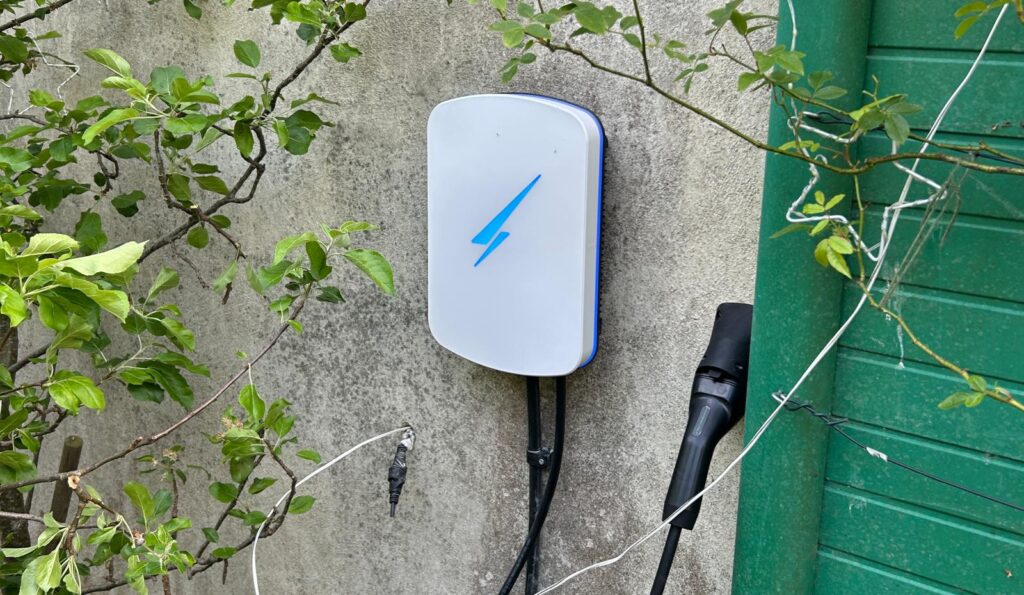
- Secure wall mounting of the charger
- Full electrical testing and certification
- DNO (Distribution Network Operator) notification where required
- Smart charging app setup if applicable
In plain terms: we supply the equipment, run the cables, connect everything safely, and leave you with a fully tested and certified charger ready to use the same day.
EV Charger Installation Cost Breakdown
Your total installation cost is made up of two main components: the charger hardware and the labour.
Charger Hardware
The charger unit itself typically costs between £450 and £900, depending on the brand and features. Popular smart charger brands include Ohme, Pod Point, Wallbox, Zappi, Easee, EO, and Andersen each offering different levels of smart functionality, load balancing, and app integration.
A tethered charger (one with a built-in cable) tends to be more convenient but slightly more expensive than an untethered model, where you plug in your own car cable each time.
Labour and Installation
Installation labour typically costs between £300 and £700. This covers the electrician’s time to route cables, connect to your fuse box, mount the unit, test the installation, and issue certification.
Total Standard Cost
Adding the two together gives the typical installed price of £800 – £1,200 for a standard home installation. This is the price most UK homeowners pay when no additional electrical work is required.
Hidden Costs That Can Increase Your EV Charger Installation Price
While most installations fall within the standard range, certain property and electrical factors can add to the overall cost. Being aware of these upfront avoids surprises on the day.
| Potential Extra | Typical Additional Cost |
|---|---|
| Consumer unit (fuse box) upgrade | £300 – £800 |
| Additional cable run (beyond 10m) | £10 – £15 per metre |
| Underground cable trenching | £200 – £600 |
| DNO electrical supply upgrade | £800 – £2,500 |
| Three-phase power upgrade | £2,000 – £5,000+ |
Consumer Unit Upgrade
If your existing fuse box is old or doesn’t have a spare circuit, it may need upgrading before the charger can be installed safely. This is one of the most common additional costs and adds £300 – £800.
Long Cable Runs
Standard installations include up to 10 metres of cable. If your parking space is further from the consumer unit for example, at the end of a long driveway or in a detached garage additional cable runs are charged at roughly £10 – £15 per metre.
Underground Trenching
Routing cable under a driveway or garden path requires digging a trench, which typically adds £200 – £600 to the cost depending on length and ground conditions.
DNO and Supply Upgrades
In some cases, your electricity supply from the Distribution Network Operator (DNO) may need upgrading to handle the additional load of an EV charger particularly for three-phase installations. This is less common for standard 7kW home chargers but can add significant cost if required.
EV Charger Installation Cost by Charger Type
Not all chargers cost the same. Here is a guide to typical installed costs across the four main charger speeds:
| Charger Type | Typical Installed Cost (UK) |
|---|---|
| 3.6kW charger | £600 – £900 |
| 7kW charger (most common) | £800 – £1,200 |
| 11kW charger (three-phase) | £1,200 – £1,800 |
| 22kW charger (three-phase) | £1,500 – £2,500 |
For the vast majority of UK homes with single-phase electricity, the 7kW charger is the recommended choice. It charges most EVs overnight and represents the best balance of cost and performance.
The 11kW and 22kW options require three-phase power, which is more common in commercial settings or some newer homes. If you are unsure what supply you have, an OZEV-approved installer like LPSEV Charging can assess this as part of your free survey.
How to Reduce Your EV Charger Installation Cost
There are several practical ways to keep your installation cost as low as possible.
1. Apply for the EV Chargepoint Grant
The Office for Zero Emission Vehicles (OZEV) offers an EV Chargepoint Grant worth up to £350 per installation for eligible renters and landlords in the UK. This grant is applied directly by your installer, reducing the amount you pay upfront. With the grant applied, the average installation cost drops to around £760.
Note: homeowners are not currently eligible for this grant, but landlords renting properties can claim it for qualifying properties.
2. Choose a Standard Installation Location
The closer your parking space is to your consumer unit, the lower the cable run cost. If you have flexibility over where you park, positioning your vehicle close to the house reduces both materials and labour costs.
3. Avoid Consumer Unit Issues in Advance
If your fuse box is older, having it assessed before your charger installation can help you budget accurately. An unexpected consumer unit upgrade on the day can add hundreds of pounds to the bill.
4. Use an OZEV-Approved Installer
Only OZEV-approved installers can apply for the government grant on your behalf. Choosing a certified installer like LPSEV Charging also ensures your installation meets all UK electrical standards and comes with the required certification which matters for home insurance purposes.
Why Choose a Professional EV Charger Installer?
Installing an EV charger involves connecting high-power electrical equipment to your home’s consumer unit. This work must be carried out by a qualified electrician it cannot legally be done as a DIY project.
Beyond the legal requirement, a professional installation from a certified company like LPSEV Charging gives you:
- Full electrical testing and certification (BS 7671 compliance)
- Peace of mind that the installation is safe and insured
- Grant eligibility only OZEV-approved installers qualify
- Manufacturer warranty on the charger unit
- DNO notification handled on your behalf
At LPSEV Charging, we have completed installations across Bristol and the surrounding region, working with all major EV brands and charger models. Our pricing is transparent, and we provide a full written quote before any work begins.
Frequently Asked Questions
How much does a 7kW EV charger installation cost in the UK?
A 7kW EV charger installation typically costs between £800 and £1,200 in the UK, including the charger unit and labour. The average is around £1,100. Costs may be higher if additional electrical work is needed.
What is included in a standard EV charger installation?
A standard installation includes the smart charger unit, up to 10m of cable, connection to your consumer unit, wall mounting, electrical testing and certification, and DNO notification where required.
Are there any grants available for EV charger installation in the UK?
Yes. The EV Chargepoint Grant (administered by OZEV) provides up to £350 off the cost of installation for eligible renters and landlords. Only installations carried out by OZEV-approved installers qualify.
How long does EV charger installation take?
Most standard EV charger installations take between two and four hours. More complex installations involving consumer unit upgrades or underground cabling may take a full day.
Does location affect EV charger installation cost?
Yes. In London and the South East, installation costs can be £200 – £400 higher than the national average due to higher labour rates in those areas.
